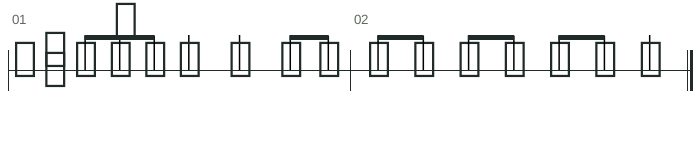
In a simple meter such as 4/4, a normal quarter-note beat divides into two eighth notes. An eighth-note triplet divides that same beat into three equal notes instead. The bracket or small “3” identifies that change in subdivision.
All three notes together occupy one quarter-note beat. The third note is not an extra note after the beat, and the whole group should not make the next beat arrive late.
Count four beats of triplets
1 trip let · 2 trip let · 3 trip let · 4 trip let
Make the three parts equal
Keep a slow quarter-note pulse and say your triplet syllables smoothly. Listen for equal spacing between all three notes. If the middle note arrives early or the final note is squeezed toward the next beat, slow down and practise just one group.
After a few clean repetitions, alternate a beat of straight eighths with a beat of triplets. The number of subdivisions changes, but the quarter-note beat stays the same. Playback gives you a reference for that relationship.
Triplets, swing and 6/8
Triplets explicitly divide a written duration into three equal parts. Swing often changes the timing relationship between a written pair of eighth notes; the exact feel can vary with style and tempo. Do not assume that every swung pair is performed as an exact triplet.
In 6/8, ordinary eighth notes already form groups of three inside the dotted-quarter beat. That compound-meter grouping feels related, but it is written differently from marked eighth-note triplets in 4/4. Practise both to connect the sound with its notation.
Questions about triplet rhythm practice
How many beats does an eighth-note triplet take?
A group of three eighth-note triplets normally occupies one quarter-note beat. Each member lasts one third of that beat.
Which syllables should I use?
“1 trip let” is a common choice. “1 la li” also works. Choose syllables that are easy to say evenly, and keep the beat numbers aligned with your steady tap.
Should I speed up to fit the third note?
The beat should stay at the same tempo. The notes within it become more closely spaced because there are three equal subdivisions instead of two. Keep tapping the same quarter-note pulse as you switch.
Is a triplet the same as swing?
No. A triplet is an explicit equal three-part division. Swing describes a performance feel applied to note pairs, and its timing can vary. Begin with equal triplets before exploring that stylistic difference.