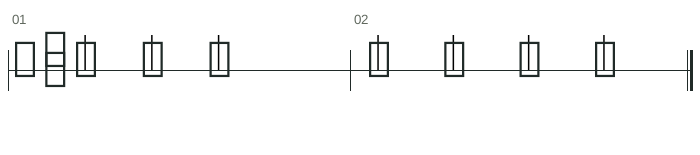
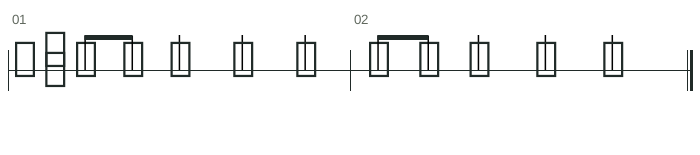
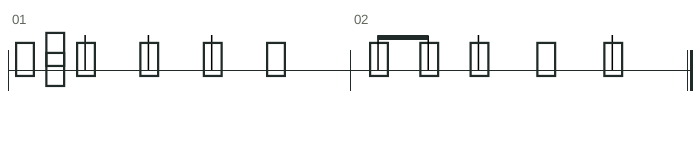
Divide the first beat into two equal eighth notes, then return to one clap on each beat.
Show counting key
Both measures: clap 1, &, 2, 3, 4. The 1 and & share the same amount of time as one quarter-note beat. Keep counting 1 & 2 & 3 & 4 & even when you do not clap every subdivision.
In 4/4, each measure contains four quarter-note beats. Begin with a slow, even “1, 2, 3, 4”. A quarter note occupies one beat; a pair of eighth notes divides one beat into two equal parts. A half note lasts for two beats.
Keep counting through a long note instead of attacking it again on each count. With a rest, the time still passes: stop the sound while your internal beat continues.
Count eighth notes in 4/4
1 & 2 & 3 & 4 &
Read, perform, then check
Look across the entire exercise before starting. Notice the time signature, repeated patterns and any rests. Choose a tempo at which you can finish the whole line without stopping.
Try the exercise independently before using playback. Listening first is useful for imitation, but a first attempt from the notation gives you a clearer reading challenge. After listening, repeat the same rhythm until the difficult part feels comfortable.
Clap or tap each written onset; hold longer values in your voice or on an instrument.
If one measure is difficult, set that measure as both the first and last playback measure. Loop it slowly, then restore the full range to reconnect the phrase.
Keep the tempo steady through rests. Silence is part of the rhythm.
Build difficulty one choice at a time
Start with quarters, eighths and their rests. Once you can read these without losing the pulse, add sixteenth notes, triplets or syncopation separately. Changing every setting at once makes it harder to identify the pattern you need to practise.
For sixteenth notes in a simple meter, a common counting system is “1 e & a”. Triplets use three equal subdivisions instead. Move to the triplet guide when you want to practise that change deliberately.
Questions about rhythm reading practice
What is a good tempo for a beginner?
Choose a speed at which you can count and finish the full exercise without pausing. Around 60–80 quarter-note beats per minute is a useful starting experiment in 4/4, but slower is fine. Increase the tempo after a few accurate repetitions.
Should I clap or use my instrument?
Either works. Clapping separates the reading task from fingerings and pitch. Once the rhythm is comfortable, play it on one note of your instrument while keeping the same pulse.
How is rhythm reading different from sight reading?
Rhythm reading focuses on durations, onsets and rests. Sight reading usually also includes pitch and instrumental technique. Practising rhythm alone lets you focus on the timing part of that larger skill.
Can I practise without listening first?
Yes. Generate an exercise, count and perform it, then press Play to compare. Use dictation mode for the reverse task: listen first, write what you heard, and reveal the notation afterward.